The Weight Trap: Understanding and Overcoming Obesity
April 16, 2026
Paul Ebenezer, RN, RM, MSN
Written and medically reviewed by Paul Ebenezer, RN, RM, MSN (Registered Nurse, MSc Nursing).
Junk food and a lack of exercise lead to obesity and diabesity, which is a dangerous mix of obesity and diabetes. This extra weight drains your health in four ways: mentally, physically, internally, and financially. However, you can fix this by simply eating more protein and fewer carbohydrates. This stops hunger, reduces snacking, and helps you lose weight naturally while preventing disease.
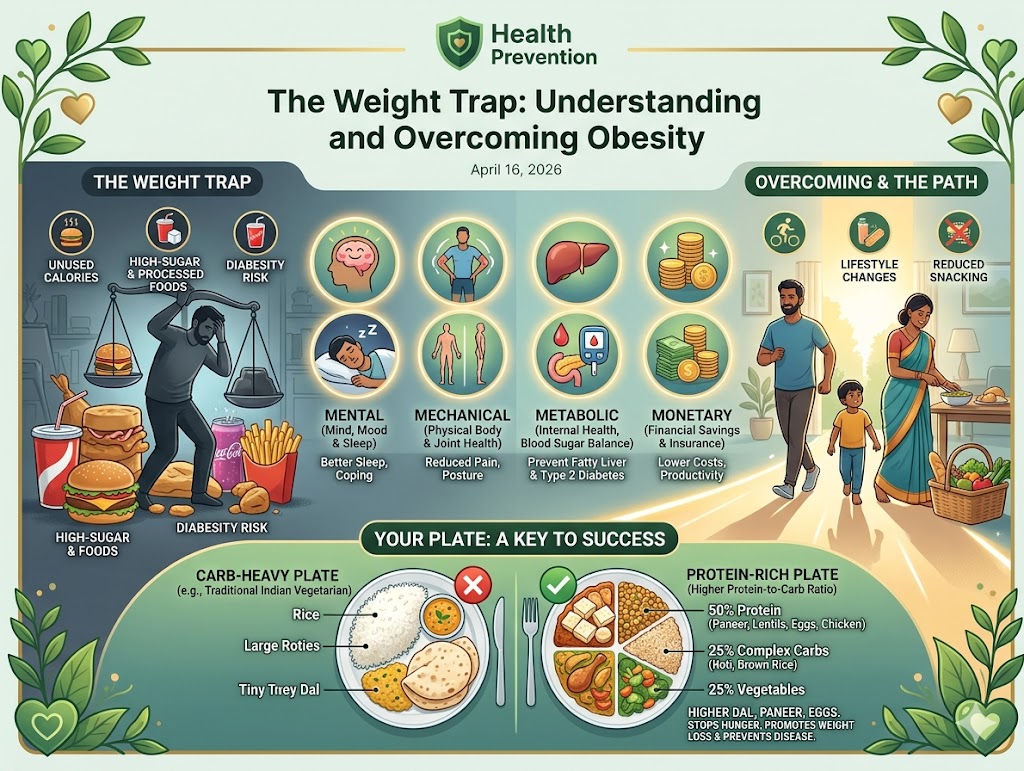
We all know the story. It is incredibly easy to gain weight these days, but losing it feels nearly impossible. With so many delicious, easily accessible, and highly processed foods around us, it is no wonder we are eating more calories than we burn. When we do not get enough physical activity, those extra calories are not used for energy. Instead, our bodies store them as fat. But what happens when the body simply cannot store any more?
When your body runs out of room to store fat safely, the excess sugar starts backing up in your bloodstream. Because it cannot escape, it leads to a condition many doctors now call diabesity, which is a dangerous mix of obesity and diabetes. When your blood sugar is too high, your body sends out warning signs. You might experience extreme thirst, heavy sweating, constant tiredness, frustration, anger, and general discomfort in your own body.
Maintaining a healthy body weight is a growing challenge, and it is not just an issue in big cities anymore. Recent data from cities in Tamil Nadu shows 71% of men and 84% of women have an unhealthy waist size. 20% of children are also falling into this category. While these numbers used to be low globally, they are now surprisingly high among Indians, with women being diagnosed with obesity most often.
Doctors often use something called the 4M Framework to understand how extra weight impacts a person. It is a simple way to look at the whole picture.
First one is Mental, which is how weight affects your mind. Carrying extra weight is heavily linked to poor sleep, eating disorders, depression, and even coping with past trauma.
Second one is Mechanical, which is how weight affects your physical body. The physical weight puts a heavy load on your body. This can cause joint pain, sleep apnea where breathing stops during sleep, acid reflux, and chronic body aches.
Third one is Metabolic, which is what happens under the surface to your internal health. Obesity leads to conditions like Type 2 diabetes, high blood pressure, high cholesterol, fatty liver, and Poly Cystic Ovarian Syndrome in women.
Fourth is Monetary, which is how weight affects your wallet. Obesity is expensive. It impacts your life through medical bills, the cost of weight loss programs, increased insurance rates, and even taking sick days away from work.
Managing obesity does not require magic; it requires a lifestyle changes. One of the most effective ways to manage your weight, especially for those at risk of diabetes in India, is to look at the protein to carbohydrate ratio on your plate.
Many traditional Indian vegetarian diets are very heavy on carbohydrates but only provide about twenty to thirty percent of the daily protein your body actually needs. Protein is very important because it keeps you full, which naturally stops you from feeling hungry all the time. It also stops the snacking because when you feel full, you lose the urge to reach for junk food between meals. A protein-rich diet supports steady weight loss and helps maintain muscle.
By simply balancing your meals with more protein and fewer empty carbs, you can successfully lose weight. More importantly, you can delay or completely prevent serious lifestyle diseases like diabetes. Small changes today can lead to a much healthier, happier tomorrow. Start by looking at what is on your plate.