The Hidden Threat: Why Silent Heart Attacks are Rising in Your 30s
May 21, 2026
Paul Ebenezer, RN, RM, MSN
Written and medically reviewed by Paul Ebenezer, RN, RM, MSN (Registered Nurse, MSc Nursing).
For decades, heart disease was comfortingly miscategorized as an "old man’s problem"
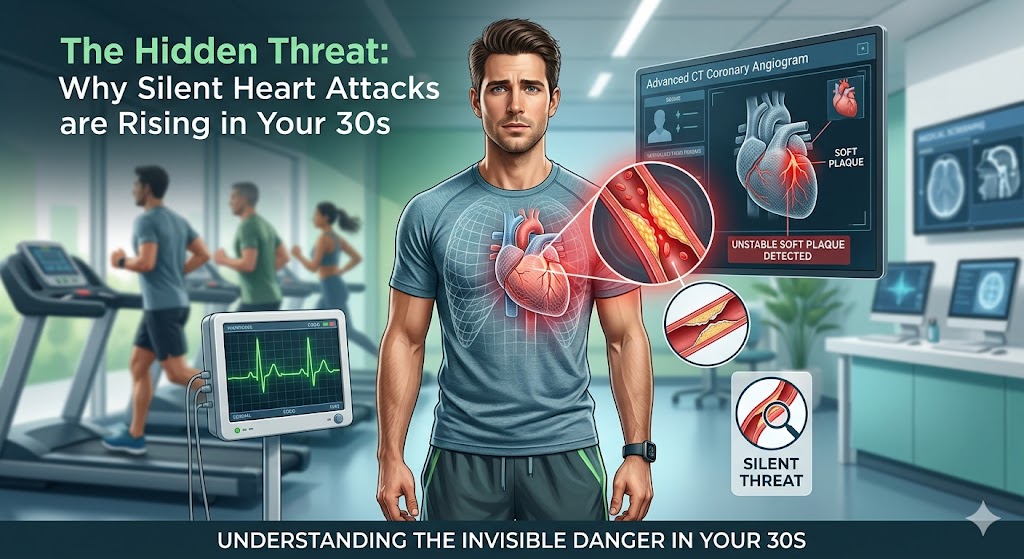
We assumed that youth, regular gym routines, and normal basic blood panels served as a bulletproof shield against cardiac failure.
However, a shifting paradigm in modern medicine tells a much more concerning story. Increasingly, individuals in their 30s—many seemingly fit and asymptomatic—are falling victim to sudden cardiac arrests and "silent" heart attacks
Understanding why this is happening requires looking beneath the surface of traditional health metrics to uncover a hidden vascular enemy.
1. The Enemy Within: Soft Plaque vs. Hard Plaque
In older demographics, coronary artery disease usually progresses slowly over several decades. Cholesterol deposits gradually build up and calcify, forming a hard plaque [05:56]. When these blockages cross the 70% to 90% threshold, they restrict blood flow, causing predictable warning signs like severe chest pain radiating to the arm, shortness of breath, and heavy sweating
In younger adults, the mechanism is dangerously different. Early-stage arterial plaque doesn't calcify immediately; instead, it exists as a soft, non-calcified mass [00:16].
Medical experts explain that an individual can have a seemingly harmless 15% to 20% soft blockage They can run on a treadmill, cycle, and feel entirely healthy. However, because soft plaque is highly unstable, a sudden spike in systemic inflammation or arterial stress can cause it to rupture. Once the plaque tears, it instantly attracts platelets and triggers acute clot formation, entirely cutting off blood flow to the heart muscle within minutes. This is why basic tests and ECGs can look completely perfect just days or hours before a tragic cardiac event
2. The Great Deception of "Silent" Symptoms
A silent heart attack means a major cardiac event occurs with no classic textbook symptoms . Instead of crushing chest pain, a young adult might experience:
Minor, non-specific abdominal discomfort or subtle restlessness
Brief, unexplained episodes of sweating
Short-lived palpitations
Because these signs closely mimic minor anxiety or simple indigestion, they are frequently ignored until it is too late.
3. Risk Factors are Sneaking In Two Decades Earlier
We cannot solve the young adult heart crisis without addressing the risk factors that precede it. Conditions like hypertension, dyslipidemia, and Type 2 diabetes are no longer waiting until your 50s; they are aggressively presenting in people's 30s
Furthermore, standard body mass index (BMI) metrics often fail us. Many young individuals exhibit the "thin-fat" phenotype—retaining a seemingly normal weight or BMI on the outside, while harboring dangerously high internal visceral fat and silent cholesterol imbalances on the inside.
4. The Perfect Storm: Modern Lifestyles and Post-Pandemic Realities
Why is this toxic arterial environment developing so early? Experts point to a modern cocktail of stress and biology
Ultra-Processed Food Ecosystems: The modern reliance on industrialized, packaged, and fast foods introduces harmful additives and endocrine disruptors into our bodies, accelerating metabolic breakdown
The Lifestyle Deficit: Chronically reduced sleep, excessive screen time, unmanaged stress (elevated cortisol), and a reliance on stimulants to stay awake keep the cardiovascular system in a continuous state of high alert
The Post-COVID Factor: Clinicians note that the COVID-19 virus, via its spike protein, demonstrated a unique property of inciting thrombus (clot) formation. For vulnerable or genetically susceptible individuals, this has created lingering, long-term cardiovascular fragility
How to Truly Protect Yourself
If traditional fitness routines and basic health checkups aren't enough to guarantee safety, what is?
Re-evaluate Your Screenings: If you have a family history of heart disease, obesity, or diabetes, don't wait until middle age to start checking your numbers
Consider Advanced Imaging: If you are at a higher risk, talk to a cardiologist about a CT Coronary Angiogram. Unlike a basic calcium scoring scan, a CT angiogram can visually map out soft, non-calcified plaques and early arterial narrowing long before they pose an imminent threat.
Audit Your Daily Choices: True preventative health lies in the unsexy realities of lifestyle management: prioritizing consecutive hours of deep sleep, cutting down heavily on ultra-processed foods, managing daily cortisol levels, and entirely avoiding smoking.
Youth is no longer an absolute defense against heart disease. By understanding the invisible threat of soft plaque and proactively monitoring metabolic health, young adults can step ahead of the curve and protect their future.